Resolving a Non-Disclosure Dispute Without Going to Trial Pt. 3


Discovering an undisclosed defect after closing does not automatically mean years of litigation. In fact, the overwhelming majority of these disputes never make it to trial or arbitration. Money, time, and stress all push both sides toward an earlier resolution, and California’s real estate contracts are built with that reality in mind.
Why Early Resolution Makes Sense
Litigation and arbitration are expensive for everyone involved, and repair costs for the kinds of problems that trigger these disputes, mold remediation, a failing HVAC system, a leaking roof, are expensive in their own right. A buyer who just closed on a home is often not in a position to also fund a multi-year lawsuit. A seller facing a well-documented claim has every incentive to resolve it before legal fees start piling up on top of the underlying repair cost.
That combination of pressures is exactly why most non-disclosure disputes settle long before anyone sees a courtroom. Some resolve at the earliest stage, through a letter. Many more resolve during mediation.
Starting With a Letter
The first formal step in most disputes is a demand letter from the buyer, laying out the facts, the legal theories being asserted, and the amount being sought. The seller typically responds with a letter of their own, addressing the buyer’s claims point by point.
A well-drafted demand letter usually does two things at once. It opens the door to litigation if a resolution cannot be reached, and it gives both sides a real chance to settle quickly, before either party has spent significant money on attorneys. For lower value disputes in particular, settling at this stage is often the most rational outcome for everyone. The buyer gets money in hand sooner, even if it is somewhat less than a jury might eventually award, and the seller caps their exposure and avoids the cost and uncertainty of a trial or arbitration.
Most demand letters may also include a request for mediation, which is where a large share of these disputes actually get resolved.
How Mediation Works
Mediation is an informal, confidential process where a neutral third party, usually a retired judge or an experienced attorney, helps both sides work toward a resolution. It is not binding. Nobody is required to have a lawyer present, and either side can walk away if they are not satisfied with where the discussion is headed.
Under the current California Residential Purchase Agreement, mediation is a prerequisite for recovering attorney’s fees at trial or arbitration, even for the party that ultimately wins. That single requirement drives a lot of mediation activity in this area, since skipping it can mean forfeiting a fee award that might otherwise be substantial.
Before the mediation session itself, each side typically submits a written mediation brief laying out the facts and, when prepared by an attorney, the relevant law supporting their position. On the day of mediation, the mediator generally meets separately with each side, gathering information, asking questions, and probing the strengths and weaknesses of each party’s case. These conversations are confidential. A mediator cannot share what one side says privately with the other side without permission. Many mediations today happen over video conference rather than in person, and mediators report that this shift has not meaningfully hurt their success rates.
If the parties reach an agreement, the terms go into a written settlement agreement signed by everyone involved. If not, the dispute moves forward to a lawsuit or arbitration.
One advantage of mediation that is easy to overlook: it allows for creative solutions a court could never order. A payment plan for a seller who cannot make a lump sum payment, or an agreement that the seller will complete certain repairs rather than pay cash, are both the kind of outcome mediation can produce that formal litigation generally cannot.
Agents and Mediation
Real estate agents occupy an interesting position in this process. Historically, agents were not required to mediate alongside their clients, since they were not signatories to the Residential Purchase Agreement itself. That created a real gap. A buyer and seller might agree to mediate, only to find that the agents involved in the transaction would not join the conversation, fragmenting what should have been a single resolution process.
That gap has narrowed with the rise of Buyer Broker Agreements, now standard following recent changes to how real estate compensation sructured nationally. Despite the fact that real estate agents are not required to participate in mediation, many agree to attend to support their client or to try and resolve any issues that their client may have related their conduct during the transaction.
What Property Owners Should Be Watching
For most buyers and sellers, the practical path through a non-disclosure dispute runs through a demand letter and mediation long before it runs through a courtroom or arbitrator. Most dispute resolve before trial or arbitration, whether at the letter stage, during mediation, during a later settlement conference, or simply because one side concludes the evidence does not support pushing further. Anyone drafting or responding to a demand letter should keep the mediation requirement in mind from the outset, since skipping that step can quietly cost a party their right to recover attorney’s fees even after a hard-won verdict.
This article is for general informational purposes and does not constitute legal advice. Every transaction involves its own facts. If you have questions about a specific property or transaction, consult a qualified real estate attorney.
Need a Consult?
Contact Hoffman | Forde today at (619) 614-2172 or intake@hoffmanforde.com. Our firm’s attorneys offer clear, strategic guidance to help with any landlord or tenant related issues.
The information in this post is considered attorney advertising under applicable California law. The contents of this post are for informational purposes only and do not constitute legal advice. The information may be incomplete or out of date. No representations, testimonials, or endorsements on this website constitute a guarantee, warranty, or prediction regarding the outcome of any legal matter.
Contact Us
If you need assistance with managing your legal issues, please contact us to schedule your initial consultation. Get Started Now

Business owners may not always have hiring an attorney at the forefront of their minds. But legal counsel doesn’t just apply to litigation or when your business is already well-established. In fact, it would prove beneficial to consult with a business attorney even before starting your enterprise. This way, you can avoid legal troubles down […]
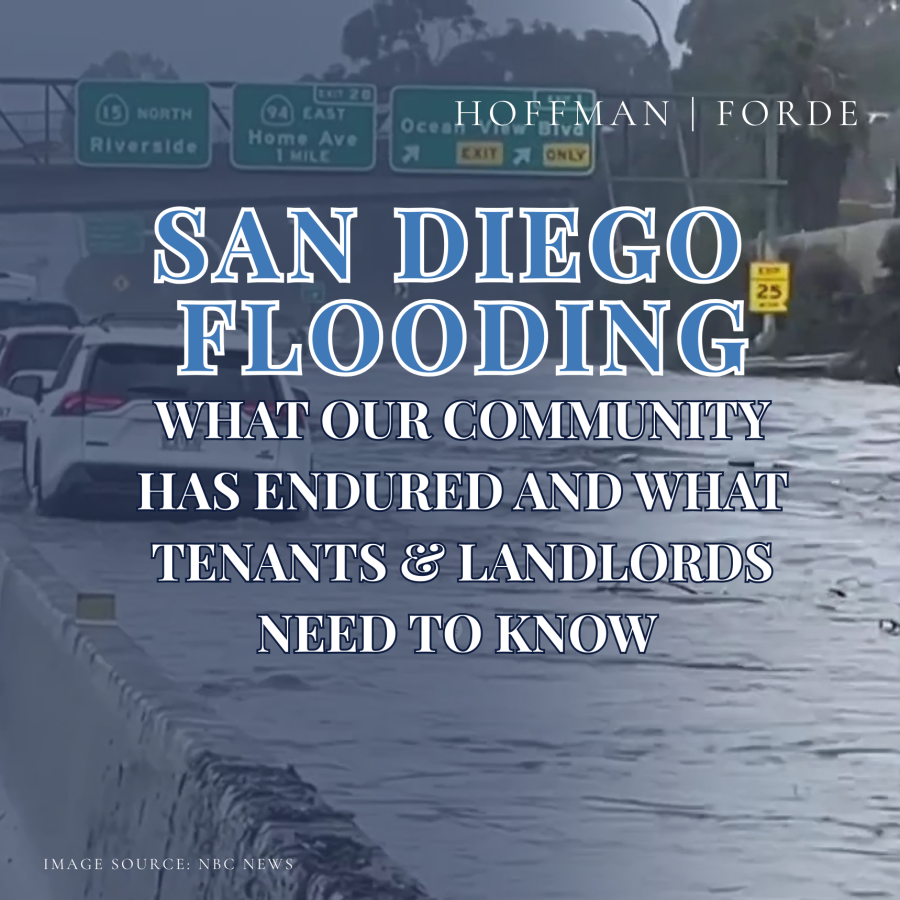
San Diego Flooding: What Our Community Has Endured and What Tenants & Landlords Need to Know The heavy rains and extensive flooding that hit San Diego in early 2024 were more than just a weather headline, they disrupted lives, damaged homes and rental properties, and left many residents scrambling for answers. From Southeast neighborhoods like […]
In Volume 1, we explored the Sitzer-Burnett lawsuit and the landmark NAR settlement that reshaped the real estate industry. Now, in Volume 2, we turn to the practical side: what these changes mean for you as a buyer or seller. From new rules on agent compensation to how negotiations work today, here’s what you need […]